La Profumiera di Venezia by Irina Vaganova
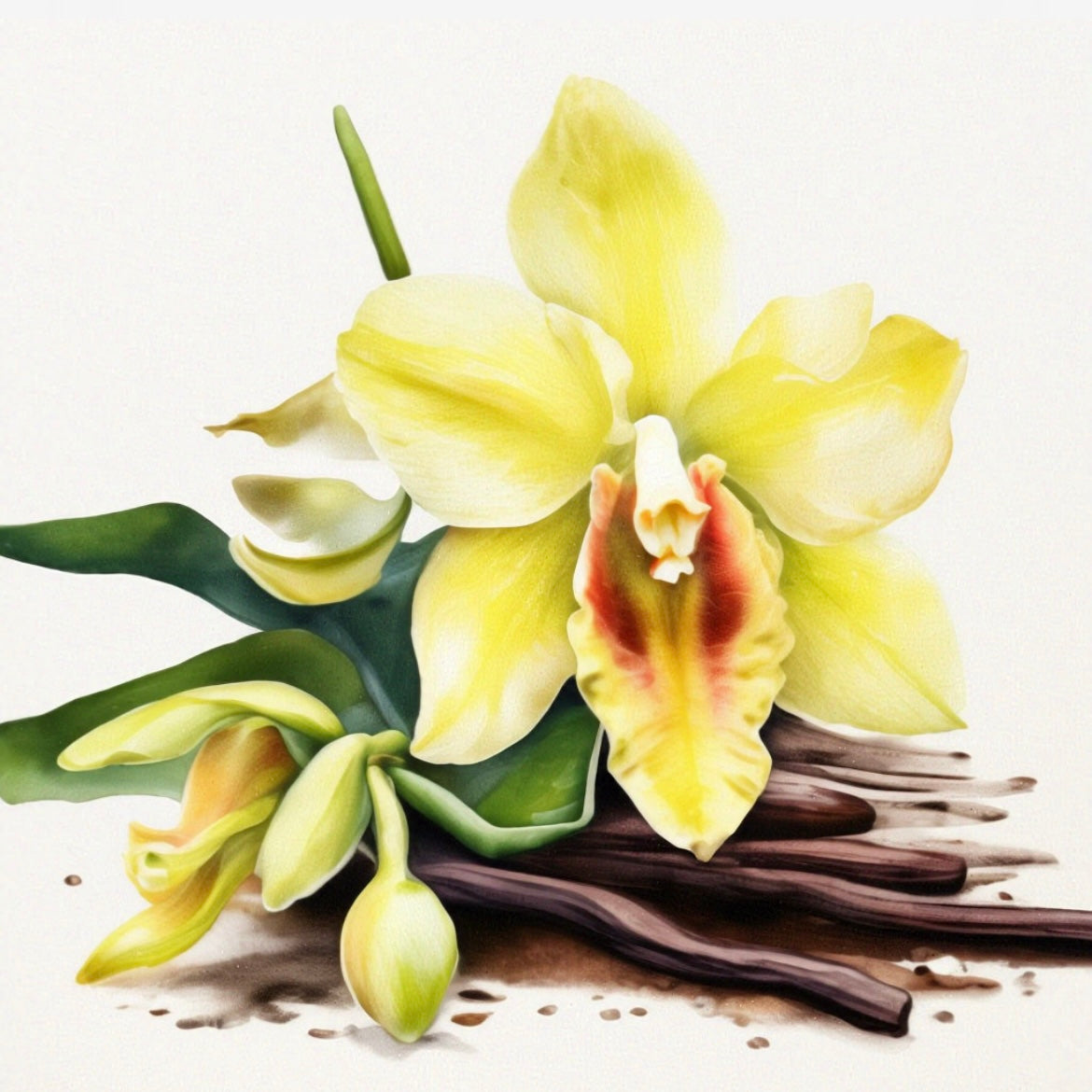
VANILLIN – sweet, creamy and warm note with hints of pure vanilla, sugar and hot milk
VANILLIN – sweet, creamy and warm note with hints of pure vanilla, sugar and hot milk
Couldn't load pickup availability
CAS 121-33-5. Vanillin has an intensely sweet and long-lasting aroma of cream and vanilla. The use of the derivative term "vanilla" is somewhat forced and unrepresentative, as many people today have never seen or smelled a vanilla pod. According to them, vanilla actually refers to products with vanillin flavoring (chocolate, cream, etc.). Non-professionals typically note that when vanillin is diluted, a "chocolate flavor" is perceived, and this is often the first reaction to its smell. However, the "creamy" effect of vanillin in small amounts in perfumes is quite distinctive. Higher proportions often cause a nauseating sweetness and very noticeable notes when drying (borderline odor). 1% vanillin is soluble in water, 5% is soluble in glycerin, and soluble in propylene glycol, alcohol, and oils. Vanillin is more soluble in diluted alcohol than in concentrated alcohol. A similar situation is observed with glycols. Among the most common materials in perfumery, vanillin is one of the most persistent odorants known. Vanillin's frequent use in perfumery makes it one of the most widely used crystalline aromas. Its intense sweetness is used to mask industrial odors and to create expensive luxury perfumes, and it can be used in virtually any type of fragrance, from woody or herbaceous to oriental or floral. Due to the high volume of vanillin produced, significant studies have been conducted to improve its composition, and chemically it is one of the purest flavorings and deodorants. Along with the improvement in vanillin quality, the quality of many raw materials used in the production of functional products has also improved. Today, vanillin does not discolor soap as much as it would have done a few decades ago. Vanillin often takes on an unpleasant color due to anthranilates, indole, quinolines, etc., as well as traces of iron (e.g., from essential oils or resinoids). However, when used correctly in perfumery or functional products, problems almost never arise. Some types of deodorants can contain particularly high amounts of vanillin (5–8–10%), and such deodorants are rarely suitable for use in white functional products (creams, hand lotions, etc.), but may be acceptable in pink or cream-colored products, where slight discoloration from vanillin will not be visible. Vanillin is widely used as a masking agent for many malodorous mass-produced industrial products, especially for products made of synthetic rubber, plastic, fiberglass, etc. It is often the most economical material due to its masking effect. In flavorings, vanillin is widely used as a sweetener, not only to create a vanilla-like aroma, but also in butter, chocolate, all types of fruit flavors, beer, cream soda, and more. Ice cream and chocolate are among the largest consumers of vanillin in the food and confectionery industries, and their consumption many times exceeds that of the perfume industry. Vanillin belongs to the balsamic family in perfumery, along with anisic aldehyde, benzoin resinoid, coumarin, ethylvanillin, gheliotropine, tonka bean absolute, and Bourbon vanilla absolute. Among modern fragrances that have used excessive amounts of vanillin are Musc Ravageur by Frederic Malle (2000), created by Maurice Roucel, a sensual fragrance whose brilliance lies in the combination of several intense ingredients in overdose: cinnamon, iris, vanillin (about 15%), animalic notes, and a mere 20% musk. Another notable creation is the oriental-gourmand perfume Ambre Narguile by Hermès (2004), in which Jean-Claude Ellena found a sensual combination of coumarin, vanillin, cinnamon, and patchouli.
Share