La Profumiera di Venezia by Irina Vaganova
COUMARIN – sweet, herbaceous and powdery note with hints of hay, vanilla and almond
COUMARIN – sweet, herbaceous and powdery note with hints of hay, vanilla and almond
Couldn't load pickup availability
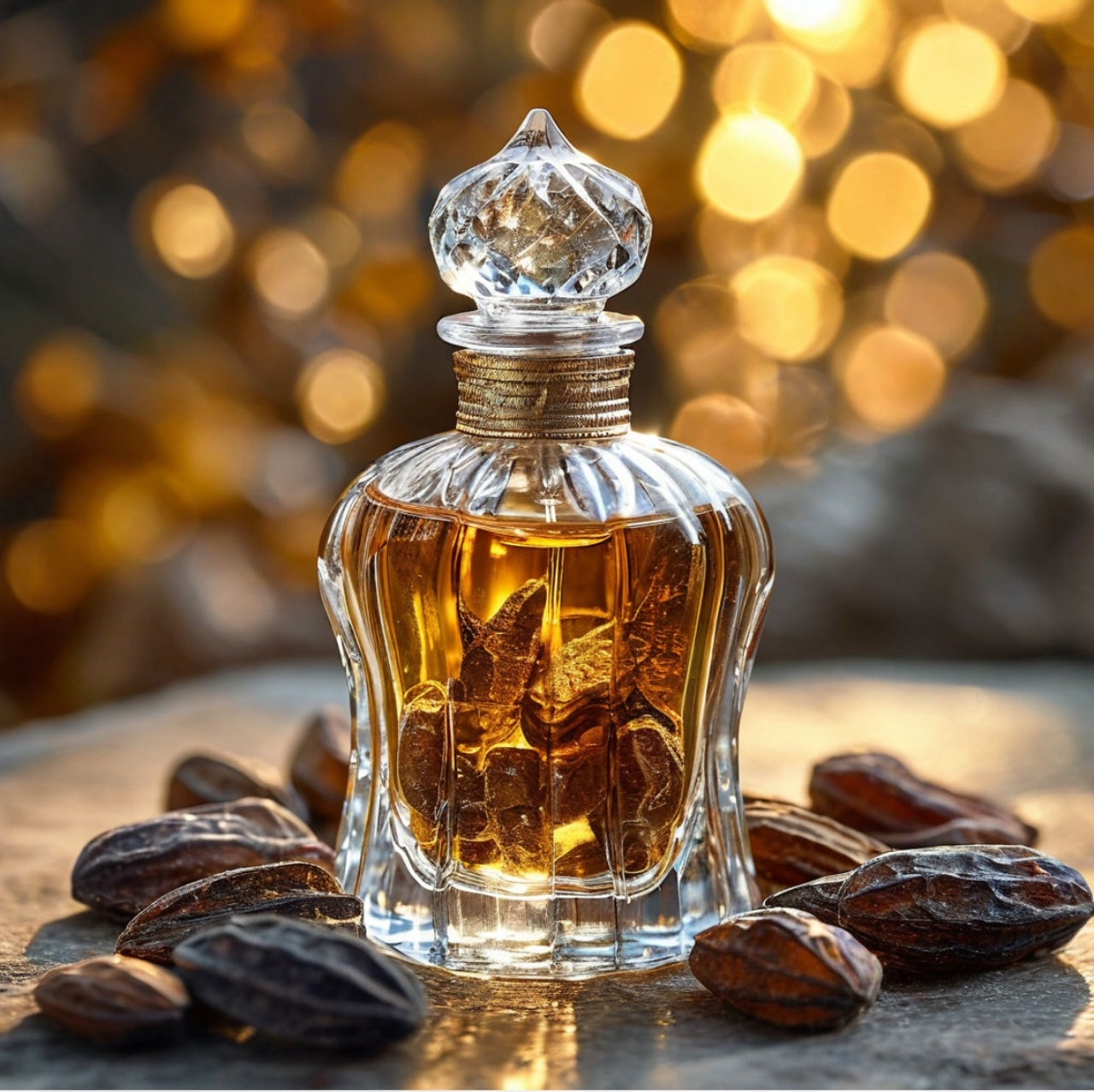
CAS 91-64-5. The sweet, powdery scent of tonka beans with fruity, hayy nuances. The characteristic scent of tonka bean absolute, where it is the main component.
A sweet, herbaceous, and warm, slightly spicy aroma that, when highly diluted, is more reminiscent of hay, walnut, and tobacco. A bitterish taste, except when highly diluted, is therefore herbaceous and sweet, similar to hay and walnut.
Coumarin is known for being the first synthetic ingredient used in perfumery (in 1882 by Paul Parquet for Houbigant in Fougère Royal, initially released as a scented soap and only later as a sophisticated fragrance). In addition to tonka beans, coumarin is naturally present in a number of different herbs and fruits, including strawberries, and can contribute to the sweetness of fruity scents and many other types of fragrances. It is a crystalline solid at room temperature and is sold in this form, with the crystals dissolving easily. It is widely used in perfumery to support herbal scents, such as lavender, lavandin, rosemary, citrus oils, oakmoss, etc., as well as a fixative in many types of fragrances; it is almost a standard ingredient in chypre perfumes with notes of amyl salicylate and lavender, with or without oakmoss.
A classic means of masking odors such as iodophor, phenolic odors, quinoline odors, etc.
Coumarin is found in various natural sources, from grass to hay to citrus peel, and its nature is such that even synthetic coumarin provides a natural effect. It is one of the best and greatest perfumery materials of all time. It works perfectly in almost any composition. Not only is it a base for chypre perfumes, but it is also used in oriental, floral, and citrus compositions. It is truly a nearly universal material that adapts to all perfume constructions.
If you add a vanilla note to a fragrance, there will be a change, but you'll still recognize the scent. But if you add coumarin, in most cases it will be a different scent.
Not only does it enhance the citrus notes, but it also envelops the floral notes, giving the fragrance greater density. It serves multiple functions: it enhances, it suppresses, it adds intensity. You can really use it for anything. The combination of methylanthranilate, which represents a floral note, and coumarin, which represents a powdery or almost edible note similar to almond... creates an extremely masculine combination. It recalls Jean-Paul Gaultier's "Le Mâle" (created by perfumer Francis Kurkdjian) or many other chypres in this category, such as Joop Homme (created by perfumer Michel Almairac). Joop Homme is a bit more oriental, but has the same structure.
You have this flower along with the powder—methylanthranilate and coumarin—that creates a surprisingly masculine accent, even though you'd expect it to be one of the more feminine accents. It's really interesting. In the days of classical perfumery, when Houbigant (perfumer Paul Parquet) created Fougère Royal, coumarin was the base of lavender... You think of fragrances for women, mainly orientals. They contained large amounts of coumarin, heliotropin, and vanillin, which modulated the spicy orange blossom accords in those fragrances. But if you look at something like a Coty chypre fragrance (by François Coty), released in 1917, the coumarin, which makes up a large part of that fragrance, softens the civet absolute, another interesting classical accord. Coumarin influences the animalic notes, mainly civet and castoreum.
Share